
News
News
Online Message
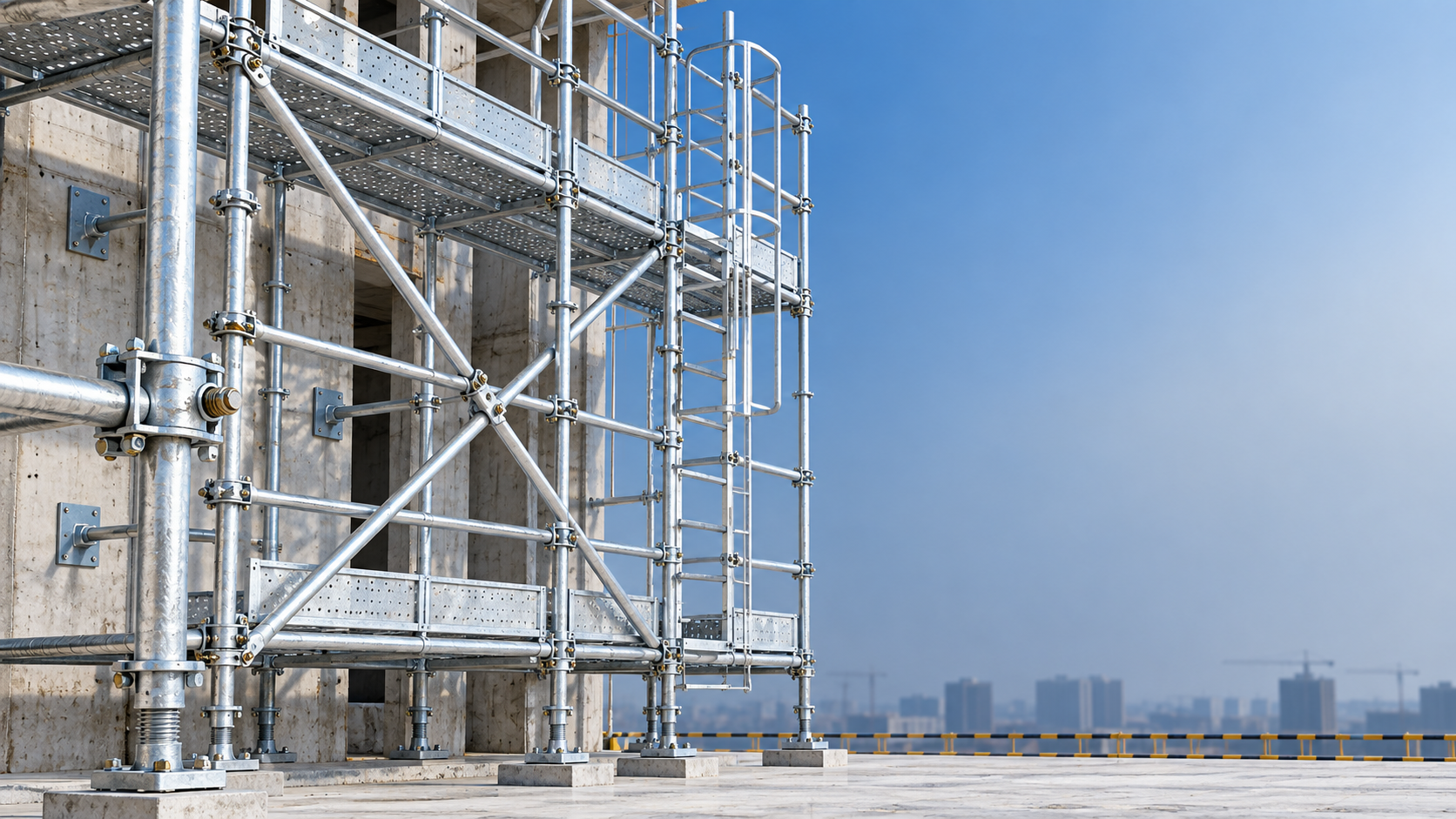
A work platform should not be released merely because the scaffold appears complete. Release means that the assembled structure has been checked against its design, the intended work, the site conditions, and the applicable legal requirements—and that no unresolved defect can affect stability, access, loading capacity, or fall protection.
The central compliance question is not whether every component is present. It is whether the complete Construction Scaffolding arrangement can safely carry the expected people, materials, tools, and environmental loads without displacement, overloading, collapse, or unsafe access. A sound pre-release inspection therefore examines the system as assembled, not just the condition of individual tubes, frames, decks, or fittings.
Applicable requirements vary by jurisdiction and project contract. In the United States, OSHA construction scaffold requirements are principally set out in 29 CFR 1926 Subpart L, including §1926.451 for general requirements and §1926.454 for training. In many other markets, EN 12811 is relevant to temporary works equipment and working scaffolds, while local regulations may impose additional inspection, handover, tagging, or competent-person requirements. A platform may meet a product standard and still fail site compliance if the erection, loading, edge protection, or inspection control is deficient.
Release starts with the intended use, not the physical inspection
Before checking the structure, the inspector needs a clear statement of what the platform is being released to do. This includes its location, working height, access route, number of users, expected materials, whether it will support bricklaying, cladding, inspection, maintenance, or other activity, and whether lifting operations will occur nearby. These factors determine the required platform width, loading class, guardrail arrangement, tie pattern, and exclusion controls.
A frequent compliance weakness is treating a scaffold designed for light-duty access as if it were a material storage platform. Bags of mortar, stacked blocks, bundled steel, façade panels, or powered equipment can change the load case substantially. The applicable design information must identify the permissible load, including any limits on concentrated loads. Material loading should be controlled by the actual rated capacity of the assembled bay, not by an assumption based on the apparent strength of the deck.
The inspection should also confirm whether the scaffold configuration matches the approved design or manufacturer’s instructions. Alterations such as removing a brace to create an opening, moving a tie to clear a doorway, extending a platform with unapproved components, or raising the structure beyond its planned height are design changes. They should not be accepted as minor field adjustments. A change that seems operationally convenient can alter the load path or reduce resistance to overturning.
Foundations and base conditions determine whether the scaffold can remain stable
Every scaffold transfers vertical, horizontal, and overturning forces to the ground or supporting structure. The release inspection should establish that this load path is continuous and suitable from the platform down to the bearing surface.
- Base plates, adjustable base jacks, sole boards, and other support elements should be present where required by the system design and site condition.
- The bearing surface must be capable of carrying the imposed load. Loose fill, recently excavated ground, frozen ground, voided slabs, service trenches, and poorly protected drainage covers require particular attention.
- Adjustable legs must remain within the manufacturer’s permitted adjustment range. Excessive extension can reduce capacity and create instability.
- Settlement, differential settlement, washout, and movement caused by vehicle traffic or excavation work must be checked before release and during use.
- The scaffold should be level and plumb within the limits specified by the applicable system instructions or engineering design. Visible lean is not a cosmetic issue; it can indicate base movement, incorrect assembly, or a developing loss of stability.
Where a scaffold is founded on a roof, suspended slab, temporary deck, cantilevered structure, or other elevated support, ground-level assumptions do not apply. The supporting structure must be assessed for the scaffold reaction loads. This review should include not only the weight of the scaffold and the intended working load, but also possible material accumulation and wind effects where relevant.
Frame geometry, bracing, and ties must create a complete load-resisting system
Scaffold collapse is rarely explained by one visibly damaged component alone. It more often results from an incomplete structural arrangement: missing diagonal bracing, inadequate ties, an altered bay, incompatible components, or connections that were not fully tightened or engaged.
The inspector should compare the assembled scaffold with the relevant erection drawing, system manual, or engineered layout. Vertical standards or frames, ledgers, transoms, braces, and ties must be located as required for that configuration. Ties and anchors deserve close attention because they restrain the scaffold against movement away from the building and resist lateral forces. Their spacing, attachment point, anchor condition, and connection method must correspond to the approved arrangement. A tie attached to a weak façade element, temporary handrail, pipe, or unverified substrate cannot be treated as equivalent to a designed anchor point.
Connection security is equally important. Couplers must be correctly seated, tightened to the manufacturer’s specified torque where applicable, and used for the purpose for which they were designed. A Right-angle coupler, for example, is intended to create a rigid 90-degree tube-to-tube connection when used with compatible tube dimensions and installed in accordance with its technical requirements. It does not replace a swivel coupler where the geometry requires an angled connection, nor does it correct an unsuitable bracing layout.
Mixed-component assemblies require special scrutiny. Tubes, couplers, frames, decks, and accessories from different systems may appear interchangeable while having different dimensions, locking details, steel grades, tolerances, or tested load capacities. Compatibility should be demonstrated by the manufacturer or supported by competent engineering review; visual fit alone is not sufficient evidence.
Platform condition is a loading and fall-prevention issue
A released platform must provide a stable, continuous, and usable working surface. Decking should be properly supported, secured against uplift or displacement where required, and arranged so that workers cannot step onto a loose, damaged, or unsupported board. Any deck with cracks, severe corrosion, excessive deflection, damaged hooks, distorted ends, broken welds, or contaminated anti-slip surfaces should be removed from service until assessed or replaced.
Gaps are not only a housekeeping concern. They affect foot safety and create falling-object exposure below. The permissible gap between platform units, and between the platform and adjacent structure, should be assessed against the governing regulation and the nature of the task. Larger openings may require additional decking, internal guardrails, covers, or other protective measures.
Material control must be verified before release. Platforms should not contain unused stock, packaging, scrap, or temporary equipment that narrows access or obscures deck condition. The available working area must remain adequate after the intended materials are placed. If mobile plant, hoists, wheelbarrows, debris chutes, or lifting devices interact with the scaffold, the inspection needs to consider impact and dynamic loading rather than static load alone.
Edge protection must be complete wherever a fall exposure exists
Guardrail systems should be checked as assemblies, not as isolated top rails. The top rail, intermediate protection, posts, end protection, toe boards where required, and all openings must work together to prevent a worker or material from falling. Rails that are present but loose, discontinuous, incorrectly positioned, or interrupted at access points do not provide reliable protection.
Particular attention is needed at platform ends, building interfaces, ladder openings, loading bays, and areas where workers transfer between the scaffold and a structure. These are common locations for temporary removals. Any removal of guardrails, toe boards, or other protective elements must be controlled, limited to the necessary activity, and restored promptly under the applicable site procedure.
Personal fall-arrest equipment does not automatically compensate for missing collective protection. Where fall arrest is required, anchorage suitability, clearance, rescue planning, and compatibility of the full system must be addressed separately. Connecting a lanyard to an arbitrary scaffold member without confirmation of its anchorage capacity can create a new hazard rather than control the original one.
Access must be designed into the released condition
Workers should be able to reach each working level without climbing cross braces, guardrails, frames, or improvised materials. The approved access method may be an integrated stair tower, ladder access bay, internal ladder, or another compliant arrangement, depending on the scaffold system and local rules.
Access ladders require checks for secure positioning, correct angle where applicable, sound rungs, adequate extension or handhold at the landing, and protected transitions between ladder and platform. Ladder openings must not leave a broad unprotected void in the work deck. Stair units should be secure, clear of stored material, and fitted with the required handrails and edge protection.
The access route is also part of emergency readiness. A narrow route blocked by materials, hoses, cables, or waste may prevent ordinary access and complicate evacuation. Releasing the platform should therefore include confirmation that approach routes and landing areas are usable under expected work conditions, not only at the moment of inspection.
Component checks should identify damage, unauthorized repair, and traceability gaps
Steel scaffold components remain susceptible to corrosion, mechanical damage, deformation, and poorly controlled repair. Inspection should identify bent standards, crushed tube ends, elongated holes, damaged locking mechanisms, thread damage on adjustable jacks, cracked welds, heavy section loss, and couplers with worn or defective bolts, nuts, or jaws. Components that cannot properly engage or transmit load as designed should be quarantined rather than returned to the stack for later use.
Surface rust is not automatically disqualifying, but corrosion must be assessed by its effect on section thickness, connection function, and protective coating condition. Fresh paint can also conceal defects. Repaired components require an authorized repair process and acceptance criteria; site welding, heating, straightening, or drilling may invalidate the component’s intended performance unless specifically permitted and controlled.
Traceability matters most where the project specification, client requirement, or local regulation calls for certified materials or defined system components. Mill certificates alone do not prove that an assembled scaffold is compliant, but identification records can help verify that the supplied materials correspond to the approved specification and that incompatible substitutions have not entered the installation.
Environmental and interface hazards can invalidate an otherwise sound inspection
A structurally complete scaffold may still be unsafe to release if external conditions have not been controlled. Overhead power lines, moving vehicles, crane loads, public access, excavation edges, façade openings, and weather exposure can materially affect safe use.
Wind is especially important for sheeted, netted, banner-covered, or partially enclosed scaffolds because these additions change wind loading. Such attachments should not be treated as housekeeping accessories. They can require a revised tie pattern, additional bracing, or engineering review. After severe weather, impact, modification, or any event that could affect structural integrity, the scaffold should be re-inspected before use in accordance with the applicable rules and site procedure.
Electrical hazards need site-specific clearance control. Scaffold tubes and platforms are conductive, and handling long members near energized lines creates a risk even when the scaffold itself is not intended to contact the line. Clearance distances and protective arrangements must follow the applicable electrical safety requirements, which may differ by voltage and jurisdiction.
Inspection records are part of control, not paperwork after the fact
A release decision should be documented in a form that identifies the scaffold location, configuration or identification number, inspection date and time, inspector, observed defects, corrective actions, loading limitations, and release status. Where a tag system is used, its status must match the actual condition of the scaffold. A tag cannot substitute for inspection, and an inspection record cannot justify continued use after a material alteration or damaging event.
The record should make restrictions visible. If a platform is approved only for a defined duty, a limited number of users, or a specific access route, that limitation must be communicated in a way that remains effective during the shift. Ambiguous release language invites uncontrolled loading and unauthorized modification.
Release is therefore a controlled handover of a temporary structure, not an administrative sign-off. The strongest check is one that connects the intended work to the actual assembled condition: stable bearing, complete structural restraint, secure connections, sound decking, protected edges, safe access, controlled loads, and a documented inspection status. When one of those elements cannot be confirmed, the appropriate compliance decision is to withhold release until the condition is corrected and re-inspected.
Please give us a message