
News
News
Online Message
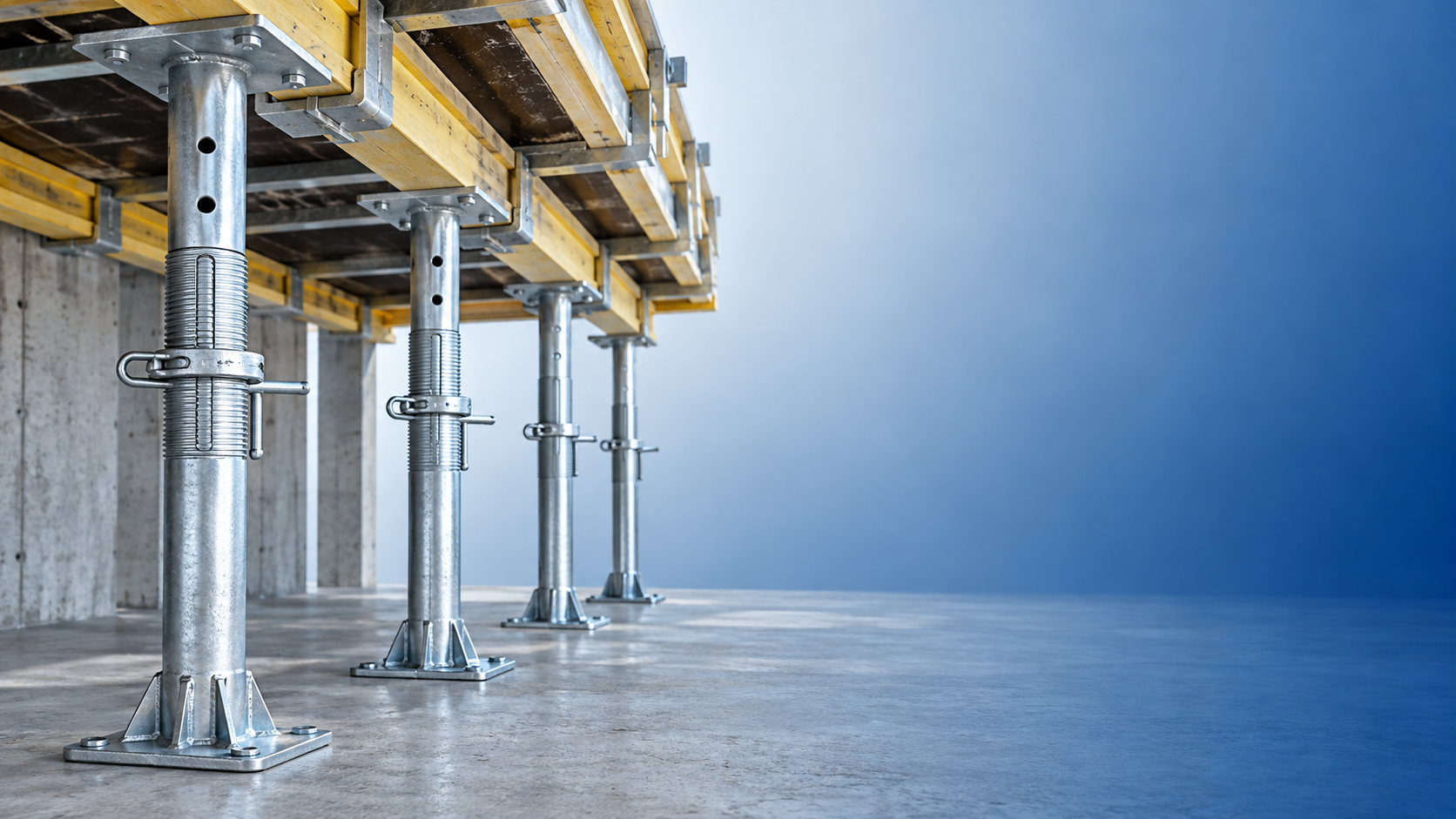
Reusing galvanized steel props can be practical, but a galvanized finish should never be treated as proof that a prop remains fit for service. Before a concrete pour, the inspection question is simple: can this individual prop still transfer the expected load safely, maintain its set height, and remain stable if the work sequence changes?
For quality and safety teams, appearance is only the starting point. A prop may still look bright on the outside while its thread, pin holes, welds, or inner tube have lost the condition needed for reliable formwork support. The inspection should therefore focus on load path, adjustment mechanism, connection integrity, and evidence of misuse during previous cycles.
Props with uncertain history, visible deformation, incomplete components, or unverified repair work should be isolated before they reach the formwork area. A quick rejection decision is often easier and safer than trying to make a marginal item work in a pour schedule.
Start with the prop’s service history and intended use
Inspection begins before the prop is extended. Identify where it has been used, how it was stored, and what it will support on the next project. A prop previously used indoors for ordinary slab formwork may face a very different demand when assigned to transfer beams, heavily loaded soffits, stepped slabs, or uneven ground conditions.
Reuse decisions should consider the full support arrangement rather than the prop in isolation. Height affects capacity. Eccentric loading affects stability. Inadequate bracing can turn a sound prop into part of an unstable system. If the planned use requires a different extension range, head arrangement, or load level than the prior application, the inspection standard should become more conservative.
Records do not need to be elaborate to be useful. A tag or inspection log should allow the team to identify units that have been rejected, repaired, set aside for cleaning, or approved only for a limited application. When props arrive mixed from several projects, this traceability helps prevent damaged units from returning to circulation simply because they are visually similar to the rest of the stock.
Inspect the tubes for straightness, crushing, and section loss
The outer tube and inner sliding tube form the main compression path. Check both along their full accessible length, rotating the prop rather than inspecting only the visible front face. Look for bends, dents, flattening, crushed areas, longitudinal splits, and local buckling. Damage near the middle of the tube may be obvious, but damage around the adjustment zone, base plate, or head plate can be just as serious because it changes how load enters or leaves the prop.
A tube with a shallow scrape may remain serviceable; a tube with a crease, flattened wall, or permanent bend should not be judged by appearance alone. Once a tubular member has been plastically deformed, its compression behavior can be altered even if it can still be extended and locked. Straightening a bent prop on site may conceal damage without restoring its original performance.
Also inspect for corrosion beneath damaged zinc coating. Galvanizing delays corrosion, but it does not prevent it indefinitely, especially where props have been stored wet, exposed to concrete residue, or left in contact with aggressive materials. Red rust at scratches or edges is one concern. More significant warning signs include pitting, rough areas around holes, scaling, or corrosion that appears to have progressed under flaking coating.
Pay particular attention to the inside tube where it enters the outer tube. Moisture, slurry, sand, and hardened concrete can accumulate in this area. If the tube cannot slide freely, workers may force the adjustment mechanism or strike the prop during installation, creating a separate damage risk.
Examine the adjustment thread before checking the pin
The threaded adjustment section is frequently where reusable props become unreliable. The collar must turn through its working range without seizure, slipping, cross-threading, or excessive play. Clean hardened concrete, paint buildup, rust, and debris before making a condition decision. A thread that appears damaged may simply be obstructed, but a cleaned thread that remains flattened, torn, or stripped is a clear reason to remove the unit from service.
Check the full portion of thread likely to be engaged at the intended working height. Damage is sometimes concentrated at one end because the prop was repeatedly used at a similar extension. It is not enough to test the collar at its lowest position if the project requires a much taller setting.
The adjustment mechanism must support the load as designed, not merely allow the prop to reach the right height. Collar cracking, distorted handles, incomplete thread engagement, or a collar that moves unexpectedly under load can lead to settlement in the formwork. Even small vertical movement can be consequential when fresh concrete is placed over a large area or when the supported assembly includes a sensitive edge, beam, or cantilevered section.
- Confirm that the collar turns smoothly after cleaning and lubrication where appropriate.
- Look for flattened thread crests, missing sections, cross-thread damage, and cracking around the collar.
- Check that the inner tube does not wobble excessively within the outer tube at the planned extension.
- Verify that the adjustment range used on site stays within the manufacturer’s permitted working range.
- Reject props that require impact force, improvised tools, or forced rotation to adjust.
Do not treat the locking pin as a minor component
The locking pin and its receiving holes often receive less attention than the tube and thread, yet they directly affect how the prop is set and retained. The pin should be the correct type and size for that prop model, straight enough to seat properly, and free from excessive wear. Substituting a random steel bar, bolt, rebar offcut, or undersized pin may allow a prop to stand temporarily, but it changes the reliability of the support arrangement.
Inspect the adjustment holes for elongation, tearing, cracking, and corrosion. Oval holes can indicate repeated loading, misuse, or a pin that has been subjected to movement. The pin should pass through cleanly and engage fully. If it binds because the tube is distorted, forcing it into place does not resolve the underlying issue.
Retaining devices matter as well. A pin that can work loose during vibration, movement of the deck, or accidental contact should not be accepted merely because it was present during the initial setup. Where the prop design includes a dedicated locking or retaining feature, it should be complete and functional.
Check welds, base plates, and head plates as load-transfer points
Welds deserve close visual inspection because they connect the tubular member to the components that bear against the ground and formwork. Examine welds at the base plate, top plate, collar housing, and any attached head fitting. Surface rust alone does not prove a weld has failed, but cracks, separation, missing weld material, deep corrosion at the weld toe, or a visibly altered joint should trigger rejection or assessment under the site’s approved repair procedure.
Base plates and head plates must sit flat enough to distribute load as intended. Check for bent corners, cupping, cracks, damaged stiffeners, and holes enlarged by improper fastening. A warped plate may create point loading on timber, plywood, sole boards, or a supporting surface. It can also encourage crews to pack the gap with loose materials, creating instability that is unrelated to the prop’s rated capacity.
Head condition should match the actual support detail. A flat head may be suitable beneath a stable bearer, while a different head arrangement may be needed where a beam or member requires positive restraint. Do not solve a mismatch by balancing timber on a narrow or damaged top plate. The contact area, bearing direction, and restraint against displacement should be checked as part of the pre-pour inspection.
Where the formwork system includes scaffold-supported access or edge work, connection hardware also needs its own inspection. A Right-angle coupler used to secure bracing or temporary scaffold elements should have an undamaged body, intact bolt and nut, clean bearing surfaces, and no cracks or severe thread wear. It does not replace the prop’s own designed bracing or load-bearing arrangement.
Separate cosmetic galvanizing damage from structural concern
Galvanized Steel Props commonly show scratches, dull areas, white storage staining, concrete marks, and local loss of shine after use. These conditions do not automatically mean that a prop is unsafe. Inspection becomes more serious when coating damage is accompanied by corrosion, tube thinning, seized movement, or deformation.
White corrosion products on galvanized steel can indicate prolonged wet storage or poor ventilation. The immediate response should be to clean and inspect the affected area, then correct the storage conditions. Leaving props stacked directly on wet ground, enclosing them while damp, or allowing concrete slurry to remain in threads and tube interfaces accelerates the deterioration that later makes inspection difficult.
Freshly painted areas should also receive attention. Protective touch-up can be appropriate after cleaning and approved maintenance, but paint must not be used to hide cracking, corrosion, unauthorized weld repair, or identification marks. A repaired prop should not return to general stock without a controlled decision on whether the repair method is permitted and whether the item still meets the required specification.
Verify stability in the assembled formwork condition
A prop can pass an individual visual check and still be unsafe after installation. The final inspection must look at the assembled support system before concrete placement begins. Confirm that props are plumb or positioned within the limits required by the system design, with firm bearing at both ends and no unsupported packing. Check that spacing matches the formwork plan and that bracing is present, connected, and not compromised by missing components.
Props should not be adjusted after they have begun carrying significant load unless the approved work procedure specifically controls that activity. Changes in ground condition, movement of bearers, impact from material handling, or early concrete placement can alter the support condition. Safety personnel should inspect again after major adjustments and before the pour proceeds into heavily loaded zones.
The load on a prop is rarely as simple as the weight of concrete directly above it. Wet concrete pressure, reinforcement, formwork members, workers, equipment, stored materials, and uneven placement can all affect the support system. Rapid or unbalanced concrete placement can introduce local overloads before the load is redistributed. Inspection should therefore be coordinated with the pour sequence rather than treated as a one-time paperwork exercise.
Use clear disposition rules after inspection
Efficient reuse depends on separating props into clear categories: approved for use, held for cleaning or minor approved maintenance, and rejected from service. Ambiguous piles create risk because crews under schedule pressure may select whatever is available.
Any prop with a bent tube, cracked weld, distorted plate, stripped thread, damaged locking hole, missing compatible pin, or uncertain structural repair should be physically removed from the usable stock. Marking alone is often insufficient when rejected and approved equipment remain in the same storage area.
The final decision should be tied to the intended concrete support arrangement. A galvanized surface extends service life when handling and storage are controlled, but it cannot compensate for mechanical damage, worn adjustment parts, or an unstable setup. When each prop is inspected as a load-bearing component rather than as a reusable piece of site inventory, quality and safety teams can make faster decisions and reduce the chance that a preventable defect becomes a formwork failure.
Please give us a message